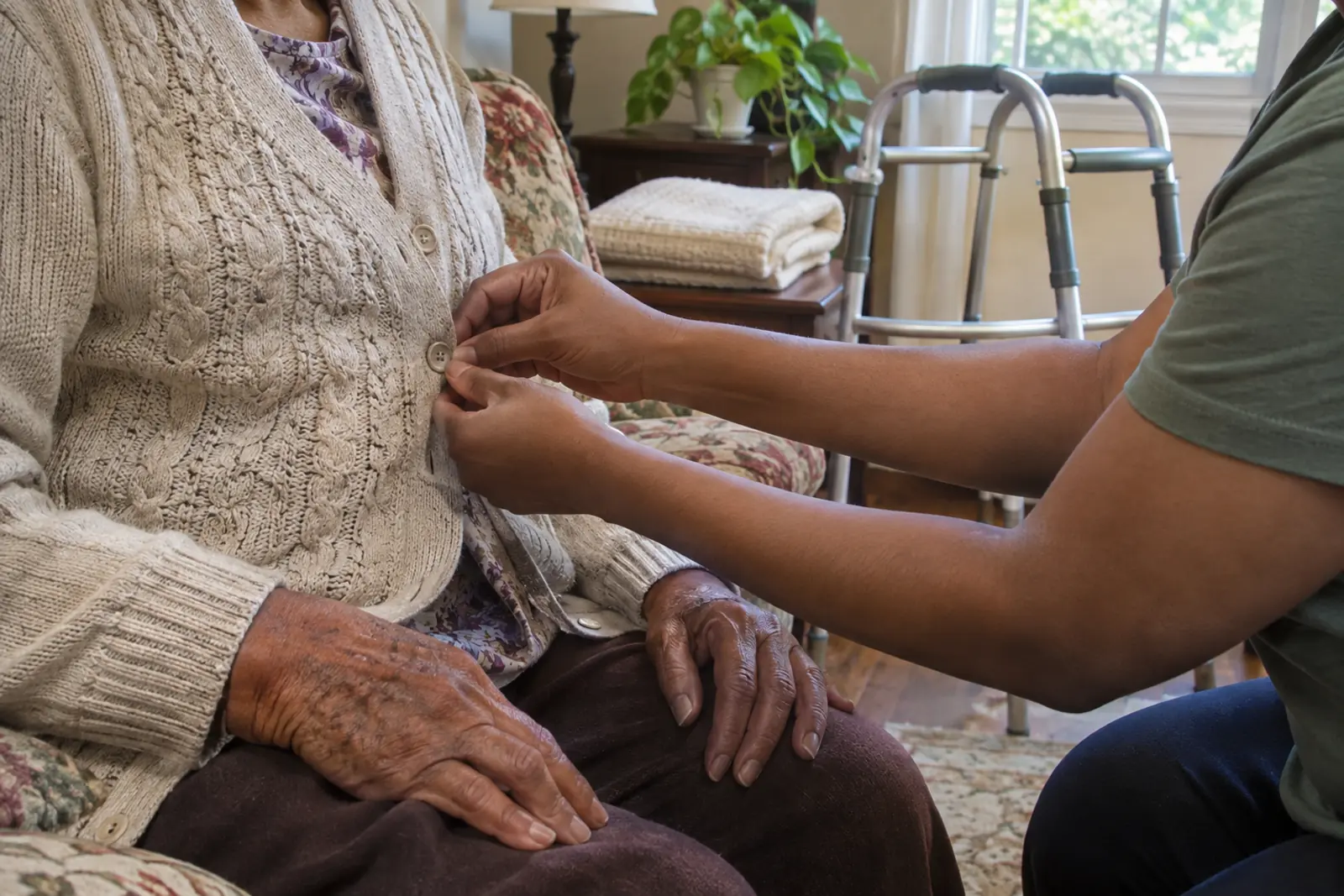
Home care and home health are not the same thing. Home care (in Georgia, “private home care” and personal care) is non-medical help with bathing, dressing, toileting, eating and household tasks, usually paid for privately. Home health is skilled nursing or therapy ordered by a doctor or other authorized provider, and Medicare covers it only when its requirements are met. Hospice is a third category: comfort-focused care when life expectancy is six months or less, as certified under Medicare’s hospice requirements. Georgia’s Department of Community Health (DCH) regulates these services under separate licensing chapters; these distinctions reflect DCH rules and Medicare information.
For families in Macon-Bibb, Warner Robins, Perry and Milledgeville, the starting question is what help the person needs. Assistance getting dressed is different from skilled treatment or care focused on comfort near the end of life. Needs can overlap, so a family may need more than one kind of support.
Home care vs home health: the key differences
The simplest test is who ordered the care and what it is for. Home health is medical: a doctor or other authorized provider orders skilled nursing or therapy, and a licensed home health agency delivers it. Home care is daily-living help that a family arranges and usually pays for directly. Home health is usually tied to a recovery or a medical condition; home care can continue for as long as the person needs help.
- Purpose: home health treats or manages a medical condition; home care supports daily activities and safety.
- Order: home health requires an order and a care plan from a doctor or other authorized provider; home care generally follows a plan of service agreed with the provider.
- Staff: home health uses nurses and therapists, with an aide in some cases; home care uses personal care assistants and companions.
- Payment: Medicare can pay for qualifying home health; home care is mostly private pay, with Medicaid waiver support when authorized.
- License: Georgia licenses home health agencies and private home care providers under different DCH chapters.
How the types of care compare
The comparison below summarizes DCH licensing rules and Medicare coverage information. A license identifies the category of service; payment depends on the person’s coverage and the benefit’s requirements.
| Type | What it is | Who provides it | Typical payer | Georgia rule |
|---|---|---|---|---|
| Personal care | Non-medical help with daily activities, including bathing, dressing, toileting and eating. | Personal care assistants through a licensed private home care provider, subject to exemptions. | Private payment; Medicaid waiver support when authorized. | DCH chapter 111-8-65. |
| Home health | Skilled nursing, therapy and related services under an ordered care plan. | A home health agency; Medicare requires a Medicare-certified agency. | Medicare when its requirements are met; other coverage depends on the benefit. | DCH chapter 111-8-31. |
| Hospice | Comfort-focused care for a person with a terminal illness. | A licensed hospice; Medicare benefit requirements also apply when Medicare pays. | The Medicare hospice benefit for eligible beneficiaries; other coverage varies. | DCH chapter 111-8-37. |
Home care vs personal care: is there a difference?
The two terms overlap heavily. In everyday use, “home care” and “personal care” both mean non-medical help at home. In Georgia’s rules the broader label is “private home care,” which covers personal care along with nursing services and companion or sitter tasks. A provider that advertises “home care” may therefore offer bathing and toileting help, meal preparation, or only companionship. Ask which specific tasks are included before comparing providers.
Personal care: help with everyday activities
Personal care is often appropriate when someone needs hands-on help with daily routines. A parent may need assistance bathing safely, managing clothing or eating a prepared meal. This support addresses daily functioning; it does not by itself provide skilled nursing or therapy.
Georgia places personal care within its private home care framework. Under DCH rules, private home care providers need a license or provisional license unless an exemption applies. That framework also includes nursing services and companion or sitter tasks, such as meal preparation, escort and essential household tasks. The label “private home care” therefore covers more than personal assistance.
Check the service and the license
A family should distinguish the specific service being offered from the broader license category. Help preparing lunch, assistance with toileting and nursing care involve different responsibilities. Readers can use this guide’s explanation of Georgia home care licensing and license checks to understand what to verify, and the overview of caregiver background checks and training in Georgia to see what screening to ask about.
DCH’s framework includes exemptions, including certain services provided directly by an individual and services provided by licensed home health agencies. An exemption has conditions; it should not be assumed simply because someone works independently. DCH proposed changes to its private home care rules in 2026, but adoption is unconfirmed. Verify the current requirements with DCH through its private home care rule information.
Home health: skilled care under an ordered plan
Home health addresses a need for skilled nursing or therapy. It may include physical, occupational or speech-language therapy, along with related services covered under the person’s benefit. The care plan should explain the skilled work being provided and how it relates to the person’s needs.
According to Medicare’s home health coverage information, Medicare requires the person to be homebound, have an in-person assessment by a doctor or other provider, and receive ordered care from a Medicare-certified home health agency. Homebound generally means the person normally cannot leave home and leaving takes considerable effort. Covered skilled care must be part-time or intermittent.
What “part-time or intermittent” means
Medicare’s home health page says skilled nursing and aide services combined generally may total up to 8 hours a day and 28 hours a week. For a short time, a provider can find more frequent care necessary, up to 35 hours a week. Medicare also says it does not cover 24-hour-a-day care at home. For people who qualify, Medicare says covered home health services cost nothing, although durable medical equipment carries a 20% share of the Medicare-approved amount after the Part B deductible (as of November 2026).
Medicare does not cover every kind of help
Medicare’s coverage information says home health aide services are covered only when the person also receives skilled nursing or therapy. Personal or custodial care is not covered when it is the only care needed. Home-delivered meals and homemaker services unrelated to the care plan are also excluded.
A family should therefore avoid assuming that a home health referral includes ongoing bathing assistance or household support. This guide explains when Medicare pays for home care in more detail. Verify current coverage with Medicare and the agency delivering the ordered services.
Hospice: care centered on comfort
Hospice supports comfort when a person has a terminal illness. Under Medicare’s hospice information, the hospice doctor and the regular doctor certify a life expectancy of six months or less. The person chooses comfort care instead of care intended to cure the terminal illness and signs an election statement. Medicare Part A is required for this benefit.
Hospice can be provided at home or in another residence. Receiving hospice does not necessarily mean moving somewhere else. Families should discuss symptoms, daily assistance and caregiver availability with the hospice team so the plan reflects what is happening at home.
Medicare’s hospice information states that room and board is not covered. It also describes coverage for short-term inpatient respite arranged by the hospice team. Readers can verify benefit details through Medicare’s hospice coverage information. The terminal prognosis requirement is not a guarantee of how long someone will live.
Hospice benefit periods and costs
Medicare describes the hospice benefit as two 90-day periods followed by an unlimited number of 60-day periods, with recertification by the hospice medical director or hospice doctor after the first six months. Medicare lists a copay of up to $5 per prescription for pain and symptom management and 5% of the Medicare-approved amount for inpatient respite care (as of November 2026). A person can still see a regular doctor or nurse practitioner who is chosen as the attending professional, and can change hospice provider once in each benefit period. Short stays arranged by the hospice team can give family caregivers a break; this guide’s page on respite care and caregiver support in Macon covers other respite options.
How a family can decide
Begin with a description of daily needs. Separate help with routine activities from skilled treatment and questions about comfort-focused care. A useful discussion includes:
- Which activities require another person’s assistance?
- What skilled nursing or therapy has been ordered?
- What symptoms or comfort concerns need clinical attention?
- What help can relatives realistically provide?
- Which services does the proposed payment source actually cover?
Needs can overlap. Someone receiving home health may also need separately arranged private personal care. A person receiving hospice at home may still need daily assistance from relatives or paid caregivers. Each care plan should make responsibilities clear; this guide’s page on care plans and service agreements describes what a written plan should cover.
Paying for non-medical help
Because Medicare does not pay for personal care alone, families often look at other sources. Georgia’s CCSP and SOURCE Medicaid waiver programs can support in-home help for people who qualify, and the guide’s pages on long-term care insurance in Georgia and VA benefits for home care cover two more routes. Eligibility rules differ for each program.
Before comparing costs, identify the service and expected amount of assistance. Readers can review home care costs in Macon and Middle Georgia for survey context. This page is general information and not medical, legal or financial advice; DCH decides Georgia licensing questions, and Medicare determines coverage under its benefits.
Sources for this page were last checked in November 2026.
Frequently Asked Questions
What is the difference between home care and home health care?
Home care is non-medical help with daily activities such as bathing, dressing and meals. Home health care is skilled nursing or therapy ordered by a doctor or other authorized provider and delivered by a home health agency. Medicare can cover qualifying home health, but not personal care when it is the only care needed.
Is personal care the same as home health?
No. Personal care helps with everyday activities, while home health provides skilled nursing or therapy under an ordered plan.
Can someone receive home health and personal care together?
Yes. The services can address different needs, but payment and responsibilities should be clarified separately. Medicare’s home health aide benefit applies only while the person also receives skilled nursing or therapy.
Does hospice require moving out of the home?
No. Hospice can be provided at home or in another residence, with arrangements based on the person’s needs and care plan. Medicare does not cover room and board, including in a facility.
Does Medicare pay when bathing help is the only need?
Medicare’s home health coverage information excludes personal care when it is the only care needed. Verify current coverage with Medicare.
Does a person need to be homebound to get home health?
For Medicare coverage, yes. Medicare says leaving home must be not recommended or require help, and the person is normally unable to leave home. Medical appointments and short, infrequent absences such as religious services are allowed, and attending adult day care does not disqualify a person.
Is hospice the same as home health?
No. Home health aims to treat or manage a condition, while hospice is comfort care for a person with a prognosis of six months or less who has chosen not to pursue care intended to cure the terminal illness.